Essential Boat Gear to Keep Onboard
Boating is rewarding but demands preparation. Whether you run a small bass boat, a skiff, or a pontoon, a well-chosen set of onboard gear keeps trips safer, more comfortable, and more productive.
This guide lists practical, must-have items and explains why each belongs onboard. Use it to build a pre-departure checklist that fits your boat, crew, and local regulations.
Essential safety gear
Start with basics that protect life and make an emergency manageable: wearable flotation for every person, throwable devices, and a first-aid kit. For most boaters, a preassembled Marine Safety Kits are the fastest way to ensure you haven’t missed staples like signaling flares, basic tools, and emergency supplies.
Fire safety and prevention
Onboard fires spread fast; portable extinguishers sized and rated for boats are non-negotiable. Mount accessible Boat Fire Extinguishers where the operator and passengers can grab them quickly—near the helm and galley if you have one. Check pressure gauges and service dates before each season.
Communication and emergency signaling
Reliable communication is the cornerstone of safe boating. A waterproof handheld radio gives you the ability to call for help and receive local weather updates; consider a dedicated Waterproof Emergency Radios rated for marine use to resist spray and immersion.
For short-range signaling when electronics fail, carry audible signals as backups. A compact, bright whistle designed for marine use is inexpensive, durable and easy to store—look for a certified Marine Emergency Whistles so you’re heard over wind and waves.
Lighting and visibility
Night and low-visibility operation require proper navigation and safety lights. Install dedicated Boat Safety Lights that meet local regulations for position and color, plus keep spare bulbs and batteries. Added deck and anchor lights improve on-deck safety and make the boat easier to spot.
Navigation and electronics
Modern electronics simplify navigation and fishing. A chartplotter or GPS is essential for unfamiliar waters, but a quality sonar unit or dedicated Fish Finders pays for itself in safety and productivity by helping you avoid hazards and quickly locate productive water. Mount displays securely and protect them from spray.
Anchoring and docking essentials
A reliable anchor and clean, strong lines are critical when you stop for a break or if you need to stop unexpectedly. For quick stops in sand or mud, an aluminum fluke design like the SandShark Premium Fluke Anchor-Retractable stores compactly and sets quickly.
Always pair anchors with proper dock and mooring lines. Keep a set of quality dock lines on board—such as a pre-cut 4-pack of marine-grade lines—to make tying off fast and secure at the slip or when rafting up: 4 Pack 1/2″ x 15’ Boat Dock Lines.
Comfort, storage, and basic tools
Practical comfort items extend trips and reduce stress. Store dry bags, a basic tool kit, spare fuel, and a compact pump or bilge tool where everyone can reach them. Add nonslip matting and weatherproof storage for electronics. Keep an organized bag for personal flotation adjustments, sunscreen, and a hat.
Fishing-specific essentials
If you fish from your boat, organize tackle, protection, and catch-handling gear. Bring a landing net, pliers, and a cooler or insulated catch bag; having gear arranged by function saves time and keeps decks clear. Even if you’re not fishing, a small rod-and-reel setup and a lightweight landing net can be useful for retrievals and light-duty tasks.
Onboard checklist
- Life jackets for every person + throwable flotation
- Marine safety kit (flares, tools, first-aid)
- Boat fire extinguisher (accessible and serviced)
- Waterproof emergency radio and backup whistle
- Navigation lights, anchor light, and spare batteries
- Chartplotter/GPS and fish finder
- Anchor with appropriate rode and dock lines
- Basic tool kit, pump, spare bilge items
- Sun protection, drinking water, small cooler
- Fishing pliers, landing net, and storage bags (if fishing)
FAQ
Q: What safety gear is legally required?
A: Requirements vary by region and boat size; typically life jackets for all aboard, navigation lights, and a sound-producing device are required. Check local maritime regulations before departure.
Q: How often should I inspect fire extinguishers and radios?
A: Inspect extinguishers monthly for pressure and damage; service or replace per the manufacturer. Test waterproof radios before each outing, keep batteries charged, and store them dry when not in use.
Q: What anchor size should I carry?
A: Anchor size depends on boat length, hull type, and bottom conditions. Manufacturers and anchors list recommendations; carrying a compact fluke-style anchor for quick stops plus a larger secondary anchor covers most scenarios.
Q: Is a fish finder necessary for safety?
A: Not required for safety, but fish finders and depth sounders increase situational awareness by revealing submerged hazards and depth changes that matter for safe navigation.
Q: How do I store gear to keep the deck clear?
A: Use dedicated lockers, lockers with labeled bins, and waterproof bags. Stow lines coiled and secured; mount extinguishers and radios in fixed, accessible mounts to prevent shifting during transit.
Conclusion
Smart, prioritized gear choices turn a risky outing into a well-managed trip. Start with life-saving items, add reliable communication and lighting, then round out the boat with anchoring, navigation, and comfort tools. Use the checklist above before every departure to reduce surprises and enjoy safer days on the water.
Products Featured in This Article
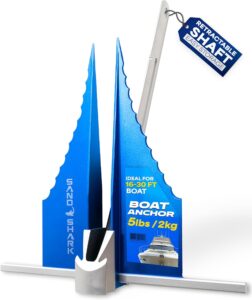
SandShark Premium Fluke Anchor-Retr…
From the brand How did we get our start? SandShark is a family owned, US based…

4 Pack 1/2″ x 15’ Boat Dock…
Product description 1 PROPELTECH’S BOAT ROPES 2 PREMIUM DOCK LINES 3 MARINE-GRADE DOCK LINES 4 BACKUP…