
Fishing Gear Basics for New Anglers
Getting started in fishing can feel overwhelming: tackle names, knots, and gear options quickly pile up. This guide cuts through the noise and gives new anglers the essential, actionable information needed to choose gear that works for most freshwater situations.
Focus on a few reliable items and learn how to use them well. Below are clear explanations of core gear, simple selection tips, and practical advice to keep your first outings productive and safe.
Choosing a Rod & Reel
For most beginners a medium-action spinning rod and reel combo is versatile, forgiving, and affordable. Look for a well-balanced outfit around 6’6″–7′ with a comfortable handle and smooth drag. A ready-to-fish combo reduces compatibility questions and lets you practice casting and retrieving without extra setup.
One dependable entry-level option to consider is the KastKing Centron Lite Fishing Rod and Reel Combo, which pairs a lightweight graphite blank with a smooth reel—great for bass, trout, and panfish.
Lines, Leaders & Knots
Line selection affects casting, sensitivity, and fish-fighting. Monofilament is cheap, knot-friendly, and stretches (good for beginners). Fluorocarbon is nearly invisible and sinks—excellent as a leader. Braided line offers extreme strength and low diameter for long casts and heavy cover.
Match line strength to target species: 6–12 lb for panfish and trout; 8–20 lb for bass; heavier for big freshwater species. Learn these basic knots: improved clinch (attaching hooks), Palomar (strong for braided lines), and a simple uni-to-uni (joining lines). For shopping and comparisons, check the Fishing Lines category for options and pound-test recommendations.
Lures & Baits: What to Carry
Start with a small, diverse selection instead of dozens of choices. A handful of proven lures covers most conditions: a couple soft plastics (worms or craws), one crankbait, one spinnerbait, and a small topwater if fishing mornings or evenings. Live baits—worms or minnows—are effective and simple when targeting picky fish.
If you want to stock a basic tackle box quickly, browse the Fishing Lures selection to compare shapes, sizes, and action. Match lure size to local forage and water clarity: smaller and subtler in clear water, larger and louder in stained water.
Essential Tools: Hooks, Pliers & Cutters
A compact set of tools prevents lost fish and headaches. Carry a few sizes of hooks (wide-gap for soft plastics, octopus for live bait), split-shot weights, a small swivel pack, and a quality pair of pliers to remove hooks and crimp split shot. Needle-nose pliers speed hook removal and can free a snagged lure without injuring the fish.
Durable, corrosion-resistant options are best; consider products labeled for marine or saltwater use even for freshwater because they last longer. A solid option when outfitting your kit is a stainless tool; see examples in the Fishing Pliers collection.
Nets, Handling & Catch-and-Release
Landing nets protect both fish and your gear. A rubber-coated net prevents line tangles and reduces scale damage; a telescoping handle helps reach fish from a boat, bank, or kayak. Use the net to lift fish gently—avoid yanking them over gunnels—and keep fish in the water as much as possible when unhooking.
If you plan to practice catch-and-release or fish from a small boat or kayak, consider a reliable landing net like the Fishing Landing Net with Aluminum Telescoping Pole. Its rubber-coated mesh and extendable pole simplify safe landings and releases.
Electronics: Fish Finders & Basics
Electronics are optional but useful for learning structure and fish behavior faster. A simple portable unit will show depth, bottom structure, and fish arches—helpful on larger lakes or when exploring new water. Start with basic sonar and GPS mapping if you fish from a boat often.
For straightforward models and comparisons, review the Fish Finders category to find units matched to your boat size and budget. Don’t rely solely on electronics—visibility, weather, and bait behavior remain critical.
Packing & Tackle Organization
Organization cuts wasted time and keeps you fishing longer. Use a compact tackle bag or backpack with removable boxes and rod holders to carry lures, tools, and personal items. Lay out tackle trays by technique (topwater, plastics, jigs) so you can swap setups quickly without fumbling.
A purpose-built option like the KastKing KarryAll Fishing Tackle Backpack provides organized storage, integrated rod holders, and comfortable carry—handy for shore, pier, and boat anglers.
Keep Your Catch & Lunch Cool
Preserving your catch and your food means a successful trip home. Insulated coolers or soft cooler bags keep ice longer and prevent spoilage—especially important on warm, sunny days. For a lightweight, day-use option that fits in a boat or backpack, choose an insulated fishing cooler that balances capacity and portability.
Consider the insulated options in the Fishing Coolers collection when picking a size that fits your boat and expected catch.
Quick Checklist Before You Head Out
- Rod, reel, and spare line spooled correctly
- Assortment of lures and live bait appropriate for target species
- Quality pliers, line cutters, and hook removers
- Landing net and simple first aid items (band-aids, antiseptic)
- Insulated cooler or cold bag for catch and food
- Appropriate clothing, sunscreen, and waterproof layer
- Local fishing license and knowledge of regulations
FAQ — Quick Answers for New Anglers
Q: What rod length should a beginner choose?
A: A 6’6″–7′ medium-action spinning rod covers most freshwater scenarios—casts well and handles a range of lure sizes.
Q: What line strength is best for bass and trout?
A: For trout, 4–8 lb monofilament or 4–6 lb braid/flouro leader. For bass, 8–15 lb monofilament or 10–20 lb braid depending on cover and lure size.
Q: How many lures do I really need to start?
A: Start with 6–10 lures: a soft plastic worm or craw, a small crankbait, a spinnerbait, a jig, a topwater, and a couple of soft swimbaits or tubes.
Q: Is a fish finder necessary?
A: No—many anglers catch plenty without electronics. A fish finder is helpful for locating structure and schools faster, especially on larger lakes or unfamiliar water.
Q: How do I avoid losing tackle in snags?
A: Use shorter casts, lighter terminal tackle when appropriate, and set your drag correctly. Learn to identify cover and use heavier braided line or change retrieval angle to free lures.
Conclusion
Start with a reliable rod-reel combo, a few lines and lures, and the basic tools to land and handle fish safely. Focus on mastering casting, a handful of knots, and reading the water. With simple, well-chosen gear and consistent practice, you’ll see rapid improvement and more enjoyable days on the water.
Products Featured in This Article
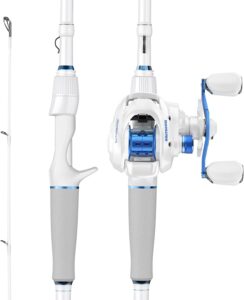
KastKing Centron Lite Fishing Rod a…
To calculate the overall star rating and percentage breakdown by star, we don’t use a simple…
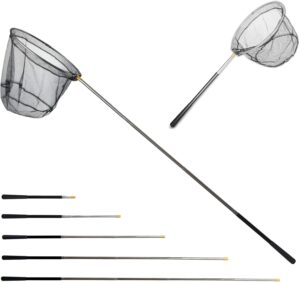
Fishing Landing Net with Aluminum T…
Always keep the telescopic pole locked when not in use to prevent accidental extension. Be cautious…
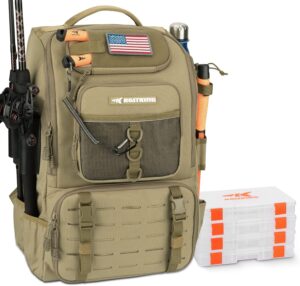
KastKing KarryAll Fishing Tackle Ba…
Product description The video showcases the product in use.The video guides you through product setup.The video…